
Breed the bird for outside.
An experiment in combining three distinctive chicken lines to explore a bird that can forage, stay alert, endure the outdoors and rely less completely on a conventional coop-and-feed system.
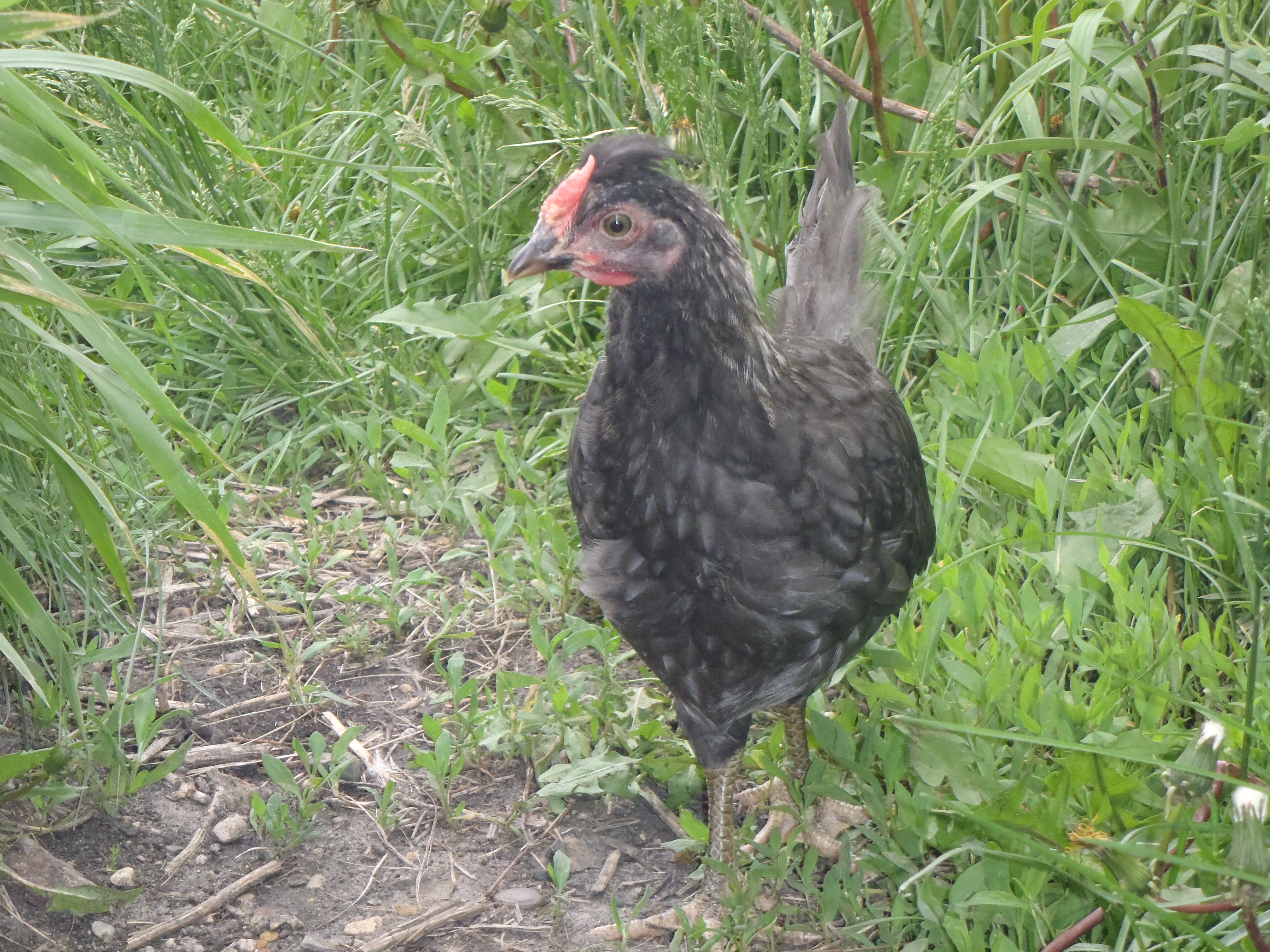


Stop breeding for the coop.
Here, the target is narrower: investigate whether the resulting birds can make better use of an outdoor environment — foraging, staying aware of threats, handling seasonal conditions and reproducing naturally — while still receiving the care and protection chickens need.
Coops are useful.
That is why this is interesting.
Traditional housing solves shelter, predator protection, nesting, feeding and containment.
So the experiment is not “coop versus no coop.” It is a narrower question: can breeding place more useful work back into the bird?
The system gives control.
- ShelterProtection from rain, wind and extreme temperatures.
- SecurityBetter protection from predators than an unprotected range.
- InputsFeed, water and nesting can be managed predictably.
- ContainmentLess wandering, garden damage and scattered waste.
The bird uses more of the environment.
- ForageUse insects, seeds and other natural food sources as part of the diet.
- Stay alertRecognize and respond to potential threats outdoors.
- Handle seasonsRemain functional when conditions are less comfortable.
- ReproduceRetain useful natural brooding and reproductive behavior.
Three birds.
Three jobs.
The supplied breed documents don't prove a finished hybrid. They give us the starting material: traits that make each founder interesting for a different part of the outdoor-chicken problem.
Icelandic Chicken
ResourcefulnessThe supplied Icelandic material describes a hardy landrace with strong foraging ability, curiosity, winter performance and natural brooding. It also describes birds that can fly and perch and that are capable of finding food across varied terrain.
Old English Game
AthleticismThe supplied Old English Game guide describes a compact, upright, athletic bird with a history rooted in game-fowl performance lines. Modern exhibition selection emphasizes vigor, balance, alert posture and consistent physical form.
American Game Fowl
VigilanceThe supplied American Game material describes a bold, independent, highly alert and hardy bird with strong natural instincts, a tendency to explore and forage, and confidence in outdoor environments. Its fighting history is documented in the source, but fighting is not the purpose of this project.
Three strengths.
One outdoor brief.
The goal is not to stack three breed names. It is to test whether useful traits from three different backgrounds can coexist in offspring that function well outdoors.
HYBRID?
What we're actually selecting for.
The visual scores below are a planning device for the project, not scientific breed measurements. They make the selection hypothesis visible without pretending it is already proven.
| Trait | Icelandic | Old English Game | American Game Fowl | Project direction |
|---|---|---|---|---|
| Foraging | High | |||
| Threat awareness | High | |||
| Outdoor hardiness | High | |||
| Natural reproduction | Retain | |||
| Athletic structure | Retain |
Don't call it a breed too early.
The supplied hybrid document describes a multi-stage process: choose the parent breeds, make initial crosses, select offspring, repeat, preserve the parent lines and test for consistency.
Select the founders.
Choose breeding stock from the three lines around the traits the project is actually trying to preserve. Parent selection is the first filter.
The starting geneticsMake the first crosses.
Produce early generations and document what appears. A desirable parent trait is not proof that the offspring will express it.
F1 / first evidenceWatch behavior in the real world.
Foraging, alertness, health, structure, seasonal performance, temperament and reproduction have to be observed rather than assumed.
Observation beats theorySelect the birds that earn it.
Keep offspring that actually express the target combination. Repeat selection over generations instead of declaring success after one mating.
Selection pressurePreserve the parent lines.
Maintain the original pure lines separately so the breeding program can remain understandable and reproducible.
Protect the inputsTest the claim.
Can the resulting line genuinely function outdoors with less dependence on conventional housing and purchased inputs? If not, the project should say so.
The result decidesThis is a project, not a product page.
The hybrid does not exist as a finished saleable line yet.
There are no hybrid birds, hatching eggs or availability claims to promote here. The purpose of this page is to share the reasoning, observations and experience as the crossbreeding work develops. If the breeding eventually produces something worth offering, that decision comes later.
What the end of the experiment might look like.
These are deliberately conceptual. They are not photographs of existing hybrids and should not be read as product representations.
Forager-forward
A selection direction emphasizing feed-thrift, range behavior and seasonal resourcefulness.
Concept only / no existing bird impliedSoundness-forward
A selection direction emphasizing athletic structure, durability, balance and an active outdoor life.
Concept only / no existing bird impliedSentinel-forward
A selection direction emphasizing vigilance, threat awareness, confidence and outdoor independence.
Concept only / no existing bird impliedNOTES ↗
Challenge
the hypothesis.
Questions, objections, observations and ideas belong in the conversation. If you've kept unusually self-sufficient birds, your experience may be useful here.
Keep following
the work.
The hybrid project sits inside the wider Happier Hatching ecosystem — hatching, poultry care, safety, supplies and stories from the flock.
See what is actually available now.
Browse chicks →Hatching, brooding and poultry education.
Start learning →Practical safety guidance for poultry housing.
Read the guide →Equipment for the parts of poultry keeping that still need it.
Visit the shop →Follow the wider Happier Hatching journey.
Read the stories →Help with incubators, brooders and hatching.
Get support →Icelandic image source · Old English Game image source · American Game image source


